
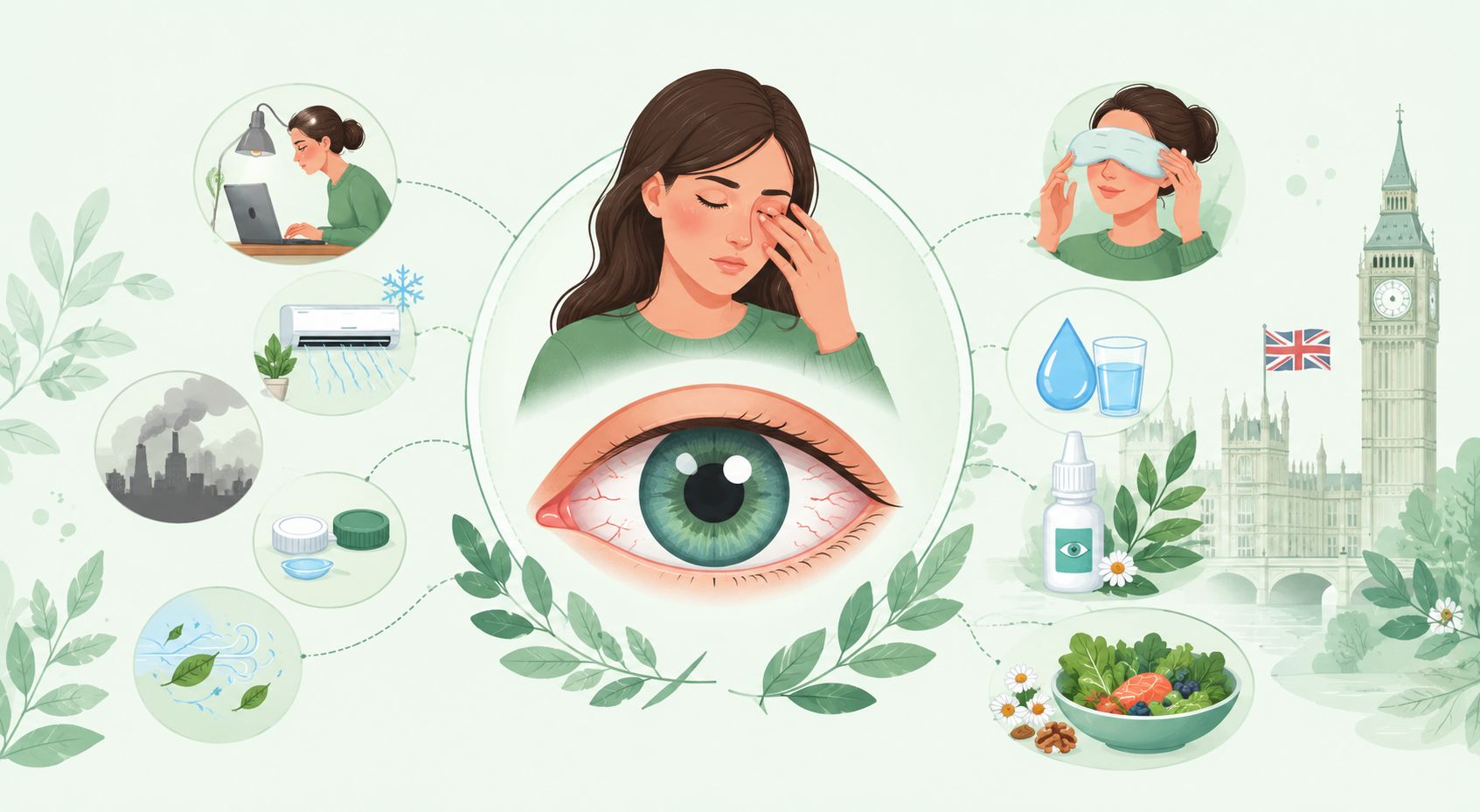
Dry Eye Causes and Remedies: A Gentle UK Guide
If your eyes feel gritty by mid-afternoon, sting after a long day at the screen, or look red despite a full night of sleep, you are not alone. Dry eye is one of the most common concerns we hear about — and the good news is that, in most cases, it responds beautifully to small, consistent changes in how we care for our eyes.
In this guide, we walk through what dry eye really is, the causes we see most often, and the gentle remedies we recommend as optometrists and as the makers of The BYE Co. range. Our goal is simple: to help you feel calm, comfortable, and clear-eyed again.
What Is Dry Eye?
Dry eye happens when our tears can't keep the surface of the eye properly lubricated. Either we are not producing enough tears, or the tears we do make evaporate too quickly because the oil layer on top is unstable. The result is a delicate eye surface that becomes inflamed, irritated, and easily fatigued.
It rarely arrives on its own. More often, it builds up quietly — a screen-heavy day here, a windy commute there, a contact lens worn a little too long — until our eyes start to protest.
Common Causes of Dry Eye
Understanding the cause is the first step to lasting relief. Here are the triggers we see most frequently in clinic and from our community.
1. Screen Time and Digital Eye Strain
When we focus on screens, we blink up to 60% less often. Fewer blinks mean less tear distribution, which leads to faster evaporation and that familiar end-of-day dryness. If your work, study, or scrolling habits keep you in front of a display for hours, this is almost certainly playing a role.
2. Environmental Factors
Air conditioning, central heating, dry winter air, wind, pollution, and dusty environments all strip moisture from the eye surface. Office air can be especially harsh, and many of us notice symptoms flare up during long flights or in heated rooms.
3. Age and Hormonal Changes
Tear production naturally slows as we age, and hormonal shifts — particularly during menopause — can change tear film composition. This is one of the most common reasons women over 40 experience persistent dryness.
4. Contact Lens Wear
Contact lenses sit on the tear film and can disrupt its balance, especially with extended wear. Even modern, breathable lenses can leave eyes feeling tired by evening.
5. Blepharitis and Meibomian Gland Dysfunction
The tiny oil glands along our lash line (the meibomian glands) produce the lipid layer that keeps tears from evaporating. When the lid margin becomes inflamed or clogged — known as blepharitis — those oils can't flow properly. This is one of the most under-recognised causes of chronic dry eye, and it's the reason we developed BYE BLEPH biodegradable eyelid wipes for daily lid hygiene.
6. Medications and Health Conditions
Antihistamines, antidepressants, blood pressure medications, and hormonal contraceptives can all reduce tear production. Conditions such as Sjögren's syndrome, rheumatoid arthritis, thyroid disorders, and diabetes are also closely linked to dry eye.
7. Lifestyle Habits
Low water intake, alcohol, smoking, poor sleep, and a diet low in omega-3 fatty acids all contribute. Eye makeup that's left on overnight, or removed harshly, can also irritate the lid margin and worsen symptoms.
Symptoms to Watch For
- Gritty or sandy sensation, as if something is in the eye
- Burning, stinging, or itching, especially by the end of the day
- Redness and tired-looking eyes
- Blurred vision that improves when you blink
- Light sensitivity and discomfort with screens
- Watery eyes — yes, really. Reflex tearing is the eye's way of compensating for dryness
- Crusty lashes in the morning, often a sign of blepharitis
Gentle Remedies for Dry Eye
The most effective approach we've found is layered: hydrate the eye surface, support healthy lids, and reduce the daily triggers that strip moisture away. Here is the routine we recommend.
1. Hydrating Eye Drops — Done Right
Not all eye drops are created equal. Many high-street options contain preservatives that, with regular use, can actually irritate sensitive eyes further. We always suggest looking for preservative-free formulas with sodium hyaluronate, which mimics the eye's natural moisture and offers lasting comfort.
This is exactly why we created BYE DRY EYE preservative-free eye drops. Formulated with electrolysed purified water and 0.1% sodium hyaluronate, they are pH-balanced, contact-lens friendly, and free from alcohol, parabens, and fragrance — clean hydration for even the most delicate eyes.
Tip from our clinic: instil one drop in each eye before screen sessions, not just after. Prevention is far gentler than rescue.
2. Daily Lid Hygiene
If your dry eye comes with crusty lashes, lid swelling, or recurring styes, lid hygiene is non-negotiable. Cleansing the lash line every day removes oil, debris, and bacteria that block the meibomian glands.
Our BYE BLEPH eyelid cleansing wipes are infused with skin-calming electrolysed water, free from preservatives and fragrance, and made with biodegradable fibres — so caring for your lids doesn't cost the planet.
3. A Soothing Hypochlorous Mist
For days when eyes and lids feel inflamed — after travel, allergy flare-ups, or a long week of makeup — a gentle hypochlorous spray can calm the skin barrier around the eye area. Our BYE STYE hypochlorous facial mist is alcohol-free and designed for the delicate skin of the lids and lashes.
4. The 20-20-20 Rule
Every 20 minutes, look at something 20 feet away for 20 seconds. It sounds small, but it dramatically restores blink rate and tear distribution during screen-heavy days.
5. Warm Compresses
A warm compress for 5–10 minutes, followed by gentle lid massage, helps unclog meibomian glands and restore the oil layer of the tear film. Pair it with our wipes for a complete evening lid ritual.
6. Hydrate, Sleep, and Eat for Your Eyes
- Drink water consistently throughout the day
- Aim for 7–9 hours of sleep, with makeup fully removed
- Add omega-3 rich foods such as oily fish, flaxseed, and walnuts
- Use a humidifier in heated or air-conditioned rooms
- Take regular breaks from contact lenses, and never sleep in them
Our Approach at The BYE Co.
We started The BYE Co. because, as optometrists, we kept seeing the same thing: people with sensitive, dry, irritated eyes were being handed harsh, preservative-laden products that often made things worse — and came wrapped in single-use plastic.
Every formula in our range is preservative-free, dermatologist- and ophthalmologist-tested, and made with naturally derived ingredients. Our packaging is designed with the planet in mind, because eye care should be kind to your body and the world around you.
When to See a Professional
Most dry eye responds well to a gentle daily routine. But please book an appointment with your optometrist or GP if you experience:
- Sudden or severe eye pain
- Vision loss or persistent blurring
- Discharge, significant redness, or swelling
- Symptoms that don't improve after several weeks of consistent care
Dry eye is sometimes a symptom of something larger, and a professional examination is the safest first step.
A Final, Gentle Word
Healthy, comfortable eyes rarely come from one heroic product. They come from small, consistent rituals — a drop before screen time, a wipe before bed, a glass of water mid-morning, and formulas you can trust on the most delicate skin on your body.
If you'd like to build that ritual with us, explore our full range of eco-friendly eye care essentials, or get in touch through our contact page — we'd love to help you find what works for your eyes.
Gentle care, every day. That's our promise.

Written by Sanaan Akhter


